
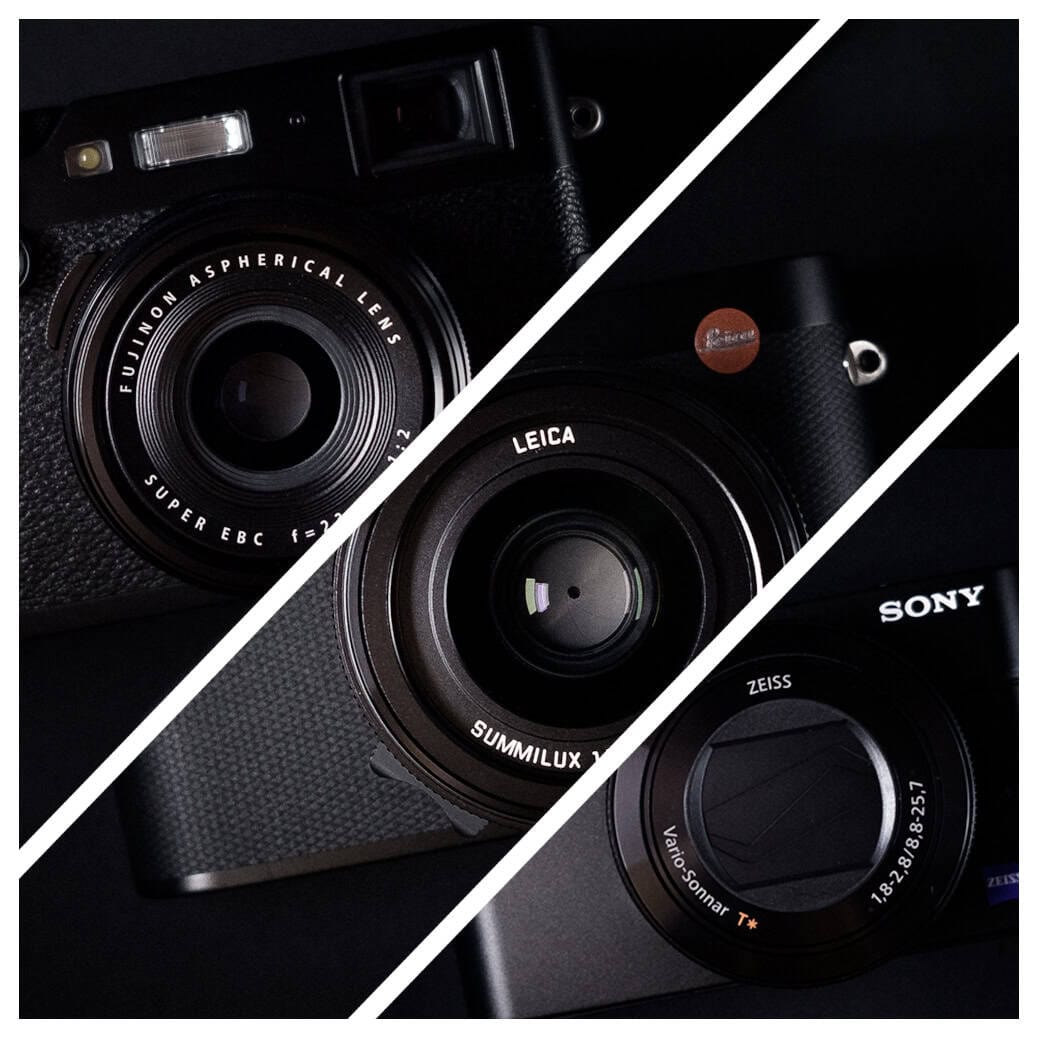
Picking a camera is tough enough under normal circumstances.
Once you figure out what you need it for, you’ve got a world of options—just pick a price range you’re comfortable with, and from there, it’s all about personal preference. Most cameras in the same category perform pretty similarly anyway.
But now, imagine you’re traveling. Suddenly, weight becomes a huge factor!
And that’s when the real struggle begins—you’ve got to find a compromise you can actually live with. Because let’s be honest, carrying a brick around all day? Not exactly fun. (And yeah, sometimes photography does feel like a life-or-death situation! 😅)
The Pacific Crest Trail and a Camera
As you already know, I’m heading off on this massive adventure—just me, my backpack, my tent, and everything else I need to survive out in the “wild”.
One of the biggest challenges in planning? I have to carry it all myself. Especially in the first 1,100 km (680 miles), where it’s mostly desert. That means I need to carry all the water I’ll need—not exactly a lightweight task. (I mean, sure, carrying water is easy… it’s just that water is heavy! 😉)
So, my main focus is keeping my backpack—and everything in it—as light as humanly possible. I expect my food and water to weigh around 8-9 kg (17-20 lbs) at times. On top of that, my base gear—backpack, tent, sleeping bag, etc.—currently sits just under 8 kg (17 lbs).
And that’s where a travel camera’s weight suddenly matters a lot.
Now I have to figure out how much of a compromise I’m willing to make when it comes to my photos.
At home, my go-to camera is a Nikon D810 with multiple lenses—an absolute beast that delivers top-tier image quality in every way.
But lugging that monster for 4,300 km (2,650 miles)? Yeah… that’d be straight-up self-sabotage. It’s just way too heavy. Unfortunately.
That said, I also can’t bring myself to rely solely on my phone for photos. Sure, phone cameras have gotten crazy good, but for me, they’re still not good enough for anything serious. The details and dynamic range just don’t cut it. For Facebook and Instagram? Absolutely fine.
But I want more than that.
Luckily, I’m happy with my phone’s video quality, so that’ll be my main tool for daily vlogging.
Looking into the options! 🚀
Sony RX100
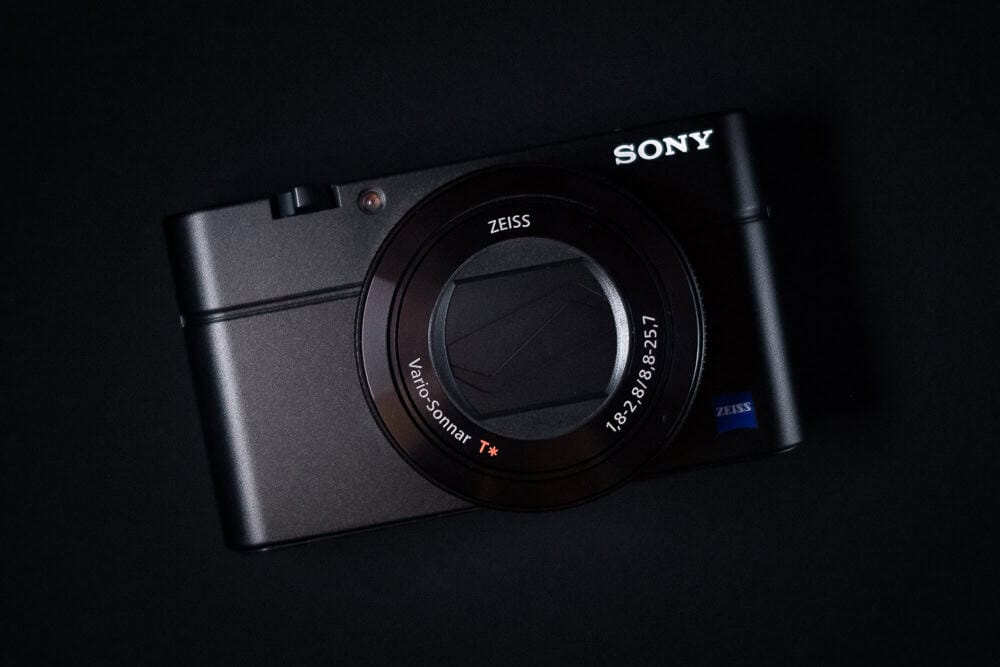
This Camera Series (Currently 5 Models) – A Travel Favorite! 🚀
This lineup of cameras is super popular for travel. Actually, it’s just really popular in general—and for good reason! So naturally, the Sony RX100 was the first option I looked into.
It’s got a 1″ sensor, a bright lens, and a solid zoom that covers most needs (depending on the model, you get 24-100mm). Plus, size-wise? You can take this thing anywhere. No matter what your plans are, it fits right in.
But… here’s the catch: the sensor is still small compared to APS-C or Full Frame. And that means it just doesn’t deliver the level of fine detail I’d want.
Sure, most people wouldn’t notice on The Facebook or The Instagram. But since I plan to edit my photos properly when I get back, I know this would lead to some extra headaches in post-processing.
That said, the Sony RX100 is absolutely one of the best travel cameras out there—for people who aren’t as picky as me 😉 (or for those who know their photos are only ever going to live on social media).
Now, the next step up, as we say in English, is…
Fujifilm X100F
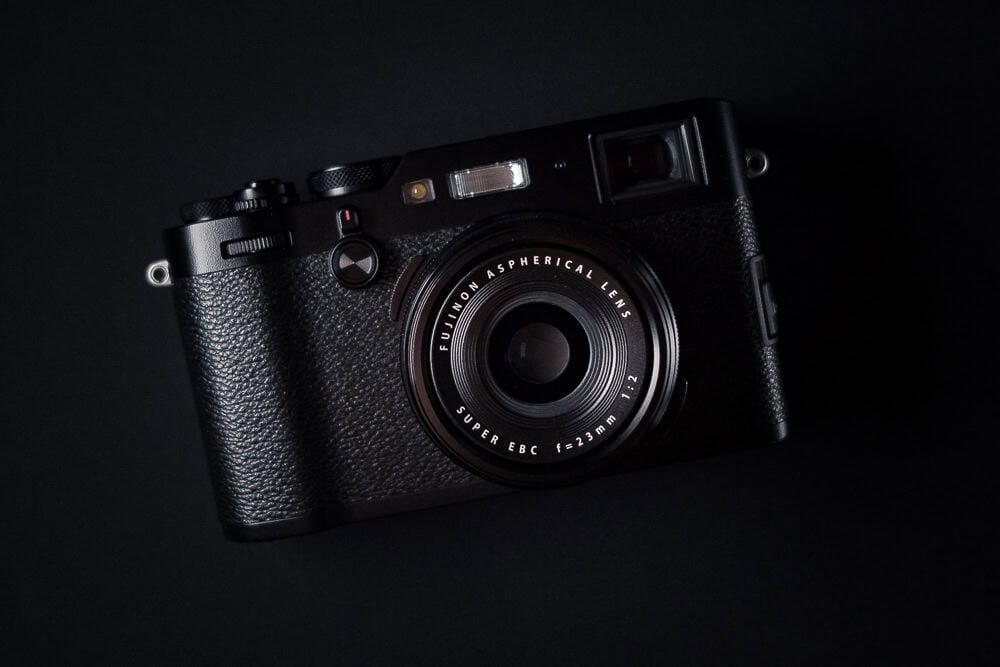
I Had Already Decided on the Fujifilm X100F… Or Had I? 🤔
For the longest time, I was set on bringing the Fujifilm X100F on my adventure out west.
In many ways, it’s the perfect travel camera—compact, with an APS-C sensor that delivers solid detail. And those Fujifilm colors? Straight out of the camera, ready to go. No need for filters or heavy editing—just snap and enjoy.
Fujifilm even promised to lend me an X100F for the trip.
And honestly, it checks almost all my boxes. Almost. But I’m still not entirely happy with the finer details. When shooting landscapes, tiny elements like distant trees can end up looking like green blobs instead of crisp details, and that matters to me.
That said, when it comes to size and weight, the X100F is fantastic—so it’s a compromise I can live with.
Now, about the 35mm focal length. It’s not my ideal choice for this trip. Since I expect to shoot mostly landscapes, 28mm would be better. But again, 35mm is totally workable and another compromise I’m willing to make.
Leica Q
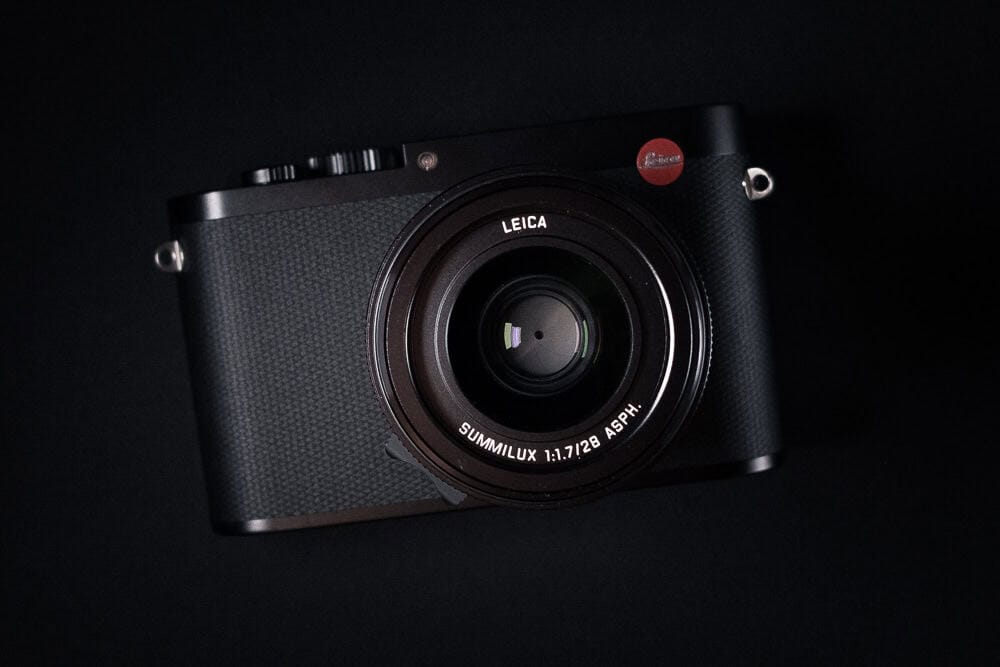
And THIS turns out to be the perfect travel camera for me on this trip
A full-frame sensor that delivers detail and image quality almost on par with my Nikon—sometimes even better!
A 28mm lens, which means I get a bit more in the frame compared to 35mm.
There are still two compromises with this camera: it’s a bit heavier than the Fujifilm X100F, and then there’s the long exposure situation. For reasons unknown, long exposure settings on Leica cameras are a bit… odd. At ISO 100, you can expose for 2 minutes, which is great. But bump it up to ISO 200? Now you only get 1 minute. And so on.
That means at ISO 3200, I’m limited to just 4 seconds of exposure. Not exactly ideal for shooting the Milky Way at night.
Oh well—I probably won’t be able to stay awake for astrophotography anyway 😉
I have a winner: Leica Q
I’ve been going back and forth on this decision for at least a year. But since I didn’t actually need the camera before my trip, I wasn’t in a rush to make up my mind. That said, this has been one of those things I’ve revisited over and over again…
Meanwhile, way more important gear decisions—like my tent, sleeping bag, and backpack—were surprisingly easy to make (after plenty of research, of course).
If you’re curious about my journey, you can follow along on my website, Instagram, or YouTube channel, where I’ll be vlogging daily once I hit the trail!
In Short:
The perfect travel camera is highly personal and depends entirely on your needs and goals.
Here’s a quick breakdown of the pros and cons of the three cameras I considered—based on my own (sometimes unreasonable) standards. So my pluses and minuses might not apply if you just want a great camera for a regular trip to capture beautiful photos.
If that’s your situation, I’d definitely recommend the Sony RX100 series. The Fuji X100F is the better camera in many ways, but since it doesn’t have a zoom, the RX100 is more flexible and will suit most travelers better.
SONY RX100
Pros: Small, lightweight, good all-around zoom. Bright lens (f/1.8-2.8), so it handles low light well. WiFi. Great video quality.
Cons: Relatively small sensor, meaning you lose fine details if you enlarge or edit your photos.
FUJIFILM X100F
Pros: APS-C sensor with excellent image quality. Beautiful colors. Stylish camera 😉. Performs well in low light (f/2.0). WiFi. Good size.
Cons: Mediocre video. Fixed 35mm lens—some fine details blend together.
LEICA Q
Pros: Full-frame sensor. Stunning image quality. Very bright lens (f/1.7). WiFi. Wide 28mm field of view.
Cons: Poor video quality. Odd/limited long exposure settings. Heavier than the others.